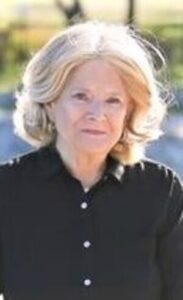
 A Celebration of Life will be held at the Annisquam Village Hall on Sunday, September 24 at 2 pm.
Essex – Mary F. (Campbell) Warner, 75, of Essex, MA, wife of David C. Warner, passed away at her residence, with her family at her side, after a long battle with cancer. Mary was born in Wappingers Falls, NY on August 22, 1947 and was the daughter of the late Kenneth and Thelma (Coffman) Campbell.
Mary was extremely generous, kind, supportive, and above all put her family first. She would do absolutely anything necessary to support her husband, children, and granddaughter. She never missed any of her family’s sporting events and baked treats for every single one. She particularly enjoyed skiing with the family in Mount Washington Valley and trips to Crested Butte. She loved her friends fiercely and cared for them deeply. Mary had many talents, working in a bank, volunteering for everything at her children’s schools as well as local groups and organizations, and became a successful realtor; she was ambitious and determined. She fought her cancer with bravery and was more courageous and stronger than anyone we know. Her energy is still felt by those that knew her and for that we are grateful.
She is survived by her husband David, her son David and wife Naomi (Chapman) and granddaughter Rose, her son Seth and wife Kim (Wright), and her daughter Kate.
She was predeceased by her parents.
In keeping with her wishes, there are no services at this time. There will be a celebration of life. The date has not yet been set.
Arrangements are by the Greely Funeral Home, 212 Washington St. Gloucester, MA. Online condolences may be given at:
.

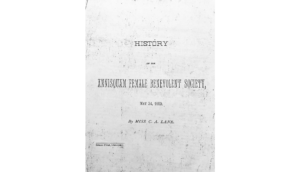 The Origins of the Annisquam Sewing Circle
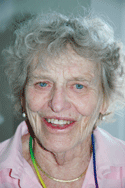 The ladies of the Sewing Circle use to prepare and serve a dinner to the men of the Leonard Club.